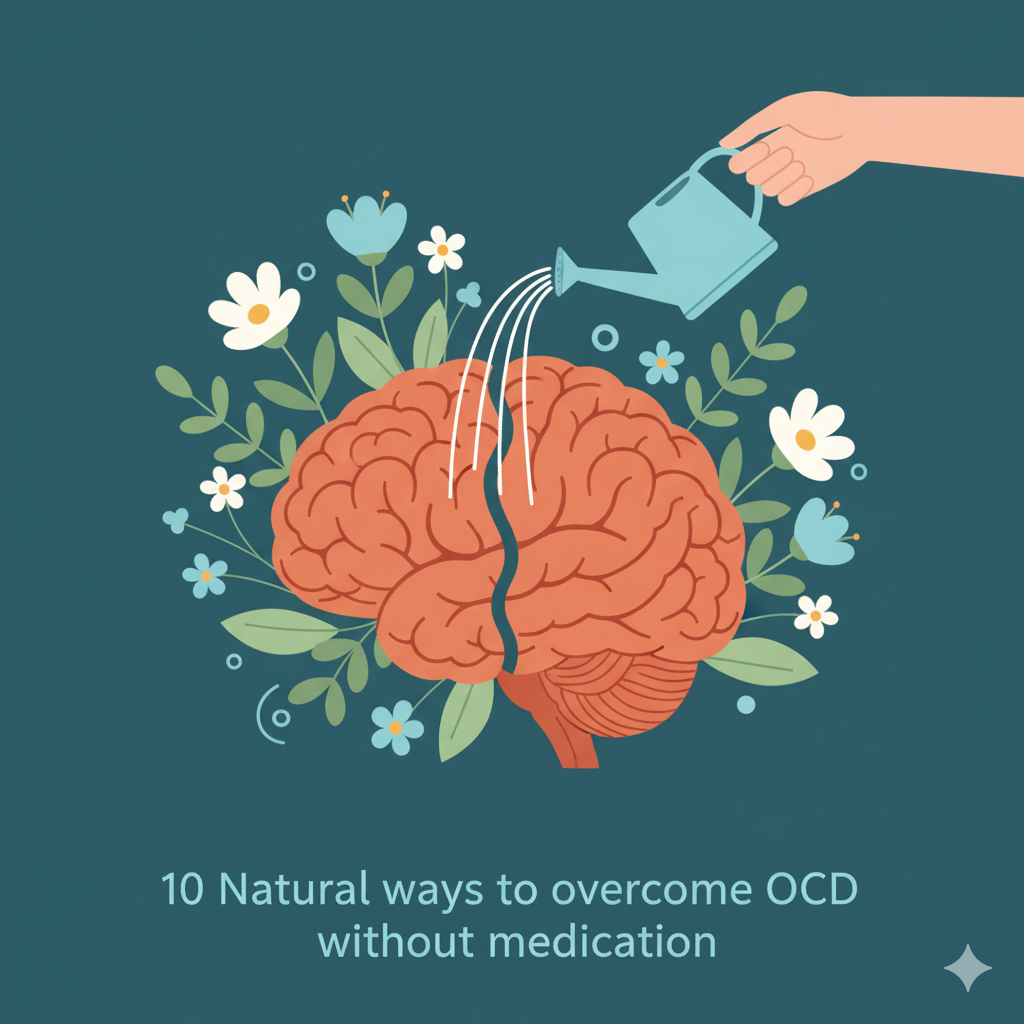
10 Natural Ways to Overcome OCD Without Medication
Have you ever felt like your mind is running the show — and you’re just trying to keep up? Thoughts repeat endlessly, actions loop over and over, and no matter how hard you try to stop, the anxiety only grows stronger. This is what life with Obsessive-Compulsive Disorder (OCD) can feel like — a constant battle between your thoughts and your peace of mind.
But here’s the truth: OCD doesn’t define you. It’s not your fault, and it’s not a weakness. OCD is a neurological pattern that can be changed — and while medication can help some people, there are powerful, natural ways to take back control of your mind and your life. Let’s explore ten evidence-based and life-tested strategies to help you manage OCD naturally and effectively.
1. Build Healthy Lifestyle Habits
The foundation of mental balance begins with your daily routine. Regular exercise, a balanced diet, and quality sleep directly impact brain chemistry. Studies show that consistent physical activity helps regulate serotonin levels — a key neurotransmitter involved in OCD.
Start small: take daily walks, eat whole foods, drink plenty of water, and maintain a consistent sleep schedule. Limit caffeine and alcohol — both can heighten anxiety and obsessive thoughts. The goal isn’t perfection; it’s consistency.
2. 🌿 Try Natural Coping Strategies
You can’t always stop intrusive thoughts, but you can change how you respond to them. Natural coping strategies like journaling, deep breathing, grounding exercises, and creative hobbies (such as painting, writing, or music) help redirect the mind’s energy.
These methods work by calming the nervous system and creating mental space between thought and reaction — allowing your brain to slowly unlearn the urge to perform compulsive behaviors.
3. 🧠 Cognitive Behavioral Therapy (CBT)
CBT is one of the most effective, science-based ways to treat OCD — and it doesn’t require medication. Through CBT, you learn to recognize irrational fears and challenge them with logic and evidence. Over time, you retrain your brain to respond differently to intrusive thoughts.
The key lies in awareness: learning that thoughts are not facts and you don’t need to act on them. Many therapists also combine CBT with ERP (Exposure and Response Prevention), which we’ll cover below.
4. ⏳ Practice Delayed Response
When an obsessive thought triggers a compulsion — like rechecking a lock or washing your hands — your first instinct is to act immediately to ease the anxiety. But this instant reaction reinforces the OCD cycle.
Try delaying your response by 30 seconds to one minute. During that pause, observe your anxiety without judgment. You’ll notice that it begins to fade on its own. This small act of patience sends a powerful signal to your brain: “I’m in control now.” With regular practice, this breaks the cycle of compulsive behavior.
5. 📵 Take a Digital Detox
Constant exposure to screens overstimulates the brain and feeds anxiety. Every ping, swipe, and scroll triggers microbursts of dopamine — keeping your mind in a constant “alert” state. For someone with OCD, this can worsen intrusive thoughts and restlessness.
Give your brain a break. Set aside one to two hours daily without screens. Read a book, meditate, take a walk, or spend time with loved ones. Even short breaks from digital noise allow your mind to reset and focus better.
6. 💪 Exposure and Response Prevention (ERP)
ERP is considered the gold standard for OCD treatment — and it works naturally without medication. In ERP, you gradually face the situations or thoughts that trigger anxiety but resist performing the compulsive behavior.
Over time, your brain learns that nothing bad happens when you don’t give in to the compulsion. This builds emotional resilience and rewires the fear response — helping you live with freedom and calm.
7. 🧘♀️ Practice Mindfulness and Meditation
Mindfulness is about being fully present in the moment — noticing your thoughts without reacting to them. For people with OCD, this can be life-changing. Meditation helps reduce overthinking and lowers activity in the brain regions linked to anxiety.
You don’t need hours of silence. Start with five minutes a day. Sit quietly, breathe deeply, and observe your thoughts pass by like clouds. Gradually, you’ll notice fewer intrusive thoughts and greater peace.
8. 🏡 Manage OCD in Daily Life
Healing from OCD is not just about therapy — it’s about structure. Creating an organized daily routine helps your brain feel grounded. Wake up and sleep at consistent times, plan your tasks, and celebrate small wins.
When life feels predictable, your mind experiences less uncertainty — one of the biggest OCD triggers. Structure builds stability, and stability builds confidence.
9. 💬 Seek Professional Guidance
While this blog focuses on natural methods, professional guidance is still a key part of recovery. A trained therapist can help you identify thought patterns, guide ERP practice, and design personalized coping strategies.
Remember: asking for help doesn’t mean you’ve failed — it means you’re taking responsibility for your healing. Combining professional therapy with natural lifestyle changes often brings the best, long-term results.
10. 🙏 Spiritual Reflection and Inner Peace
Sometimes, the mind doesn’t need logic — it needs peace. Spiritual reflection, prayer, or quiet self-connection can provide emotional grounding and hope. Taking a few minutes each day to pause, breathe, or express gratitude calms the inner storm.
Remember, OCD is not a flaw. It’s a pattern — and patterns can change. You are not your thoughts; you are the awareness observing them. Every mindful choice you make weakens OCD’s grip and strengthens your control.
🌟 Final Thoughts
Overcoming OCD naturally requires patience, self-compassion, and daily effort. It’s not about silencing your mind — it’s about changing your relationship with it. When you begin to see intrusive thoughts as harmless noise, they lose their power.
Start small, stay consistent, and remember: every delay, every deep breath, every mindful choice is a victory. You are stronger than your compulsions, and healing is absolutely possible — one peaceful moment at a time.