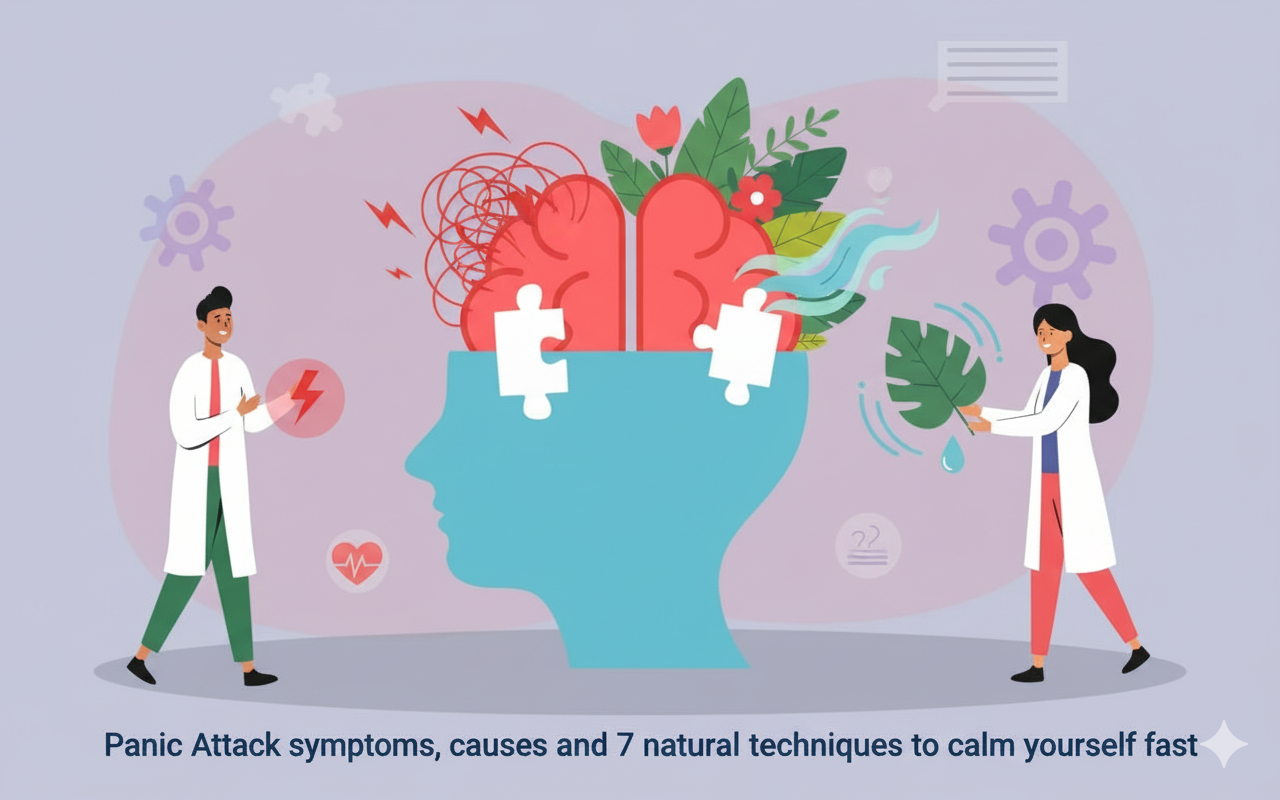
Understanding Panic Attacks: What Happens, Why It Happens & How to Stop It Fast
Have you ever felt your heart suddenly racing, your breath catching, and a wave of intense fear washing over you — like something terrible is about to happen? You’re not alone. Many people experience these sudden, overwhelming moments and wonder, “Am I having a heart attack?” In most cases, it’s actually a panic attack.
Panic attacks are more than emotional outbursts. They are powerful physical and mental responses caused by the brain’s emergency system activating without real danger. Let’s explore what truly happens during a panic attack, why it occurs, and how you can regain control using seven simple, effective techniques at home.
What Exactly Is a Panic Attack?
A panic attack is not “just in your head.” It’s a full-body reaction. During a panic attack, your brain sends a false danger signal to your body, triggering adrenaline and activating the fight-or-flight response. Your heart rate increases, breathing becomes shallow, and your body feels overwhelmed with fear — even though you’re completely safe.
Imagine sitting quietly at home when suddenly an old memory or random thought flashes through your mind. Within seconds, your body reacts as if a real threat is near — your heart pounds, hands turn cold, and you feel like losing control. This is the body’s natural defense system misfiring.
The Panic Cycle
Panic often repeats in a cycle. A harmless body sensation — like a skipped heartbeat — is misinterpreted as danger. That fear triggers more physical sensations, which lead to more fear. The brain and body feed into each other, keeping the cycle alive until you learn how to interrupt it.
Why Does the Brain React Like This?
Your brain’s job is to keep you alive. But sometimes it overreacts. There are three main reasons this happens:
🧠 1. Biological Reason
Deep inside your brain, the amygdala acts as a danger detector. When it becomes overactive, it sends false alarms. Your body reacts with a surge of adrenaline — pounding heart, sweating, dizziness, and a sense of doom — even when no real threat exists.
🌍 2. Evolutionary Reason
Thousands of years ago, humans faced real dangers in nature. Our brains evolved a system to respond instantly to threats by fighting or fleeing. That same system still exists — but today, it can trigger from emotional stress, loud noises, or even thoughts of fear.
💭 3. Cognitive (Thought-Based) Reason
Sometimes, panic comes from learned associations. For example, if you once had a panic attack in an elevator, your brain might link elevators with danger. Even thinking about one can trigger panic. These false links can cause panic to reappear until you consciously break the pattern.
How to Tell a Panic Attack from a Heart Attack
It’s easy to confuse panic attacks with heart attacks since both cause chest pain and shortness of breath. Here’s how to tell the difference:
- Panic attack: Starts suddenly, peaks within minutes, and improves with deep breathing or relaxation.
- Heart attack: Develops gradually, pain spreads to arms, jaw, or back, and does not improve with rest.
- Panic pain feels sharp and localized, while heart attack pain feels heavy and spreading.
If you ever suspect a heart attack, seek emergency help. But if doctors confirm your heart is healthy, your symptoms may be from panic — and that’s something you can manage.
7 Natural Techniques to Calm Panic Attacks Fast
🌊 1. “Bring It On” Technique
Don’t fight the panic — observe it. Treat it like a wave: it rises, peaks, and falls. When you stop resisting, the fear loses intensity. Simply watch your body’s sensations and remind yourself that it will pass.
🏃♀️ 2. Physical Shift
Move your body to release excess adrenaline. Climb stairs, stretch, or do light exercise. Physical movement resets your nervous system and helps calm you down within minutes.
⏱️ 3. The 90-Second Rule
An adrenaline surge only lasts about 90 seconds. When panic starts, breathe deeply and remind yourself: “This will pass in a minute and a half.” Focus on breathing slowly until your body relaxes naturally.
🔄 4. Do the Opposite
When your brain says “Run!”, do the opposite — stay. This teaches your brain that the situation isn’t dangerous. Over time, it stops associating certain places or sensations with fear.
💧 5. Activate the Vagus Nerve
The vagus nerve helps control calmness. Splash cold water on your face, gently rub your ears, or massage your neck and shoulders. These simple actions activate your body’s relaxation system and slow your heart rate.
🌿 6. Grounding Technique
Use the 5-4-3-2-1 method to ground yourself:
- 👀 5 things you can see
- ✋ 4 things you can touch
- 👂 3 things you can hear
- 👃 2 things you can smell
- 👅 1 thing you can taste
This brings you back to the present moment and away from your fears.
🎵 7. Panic Playlist & Self-Comfort Letter
Create a playlist of calming music to play when panic strikes. Music helps regulate your emotions. You can also write a letter to yourself that says, “You’ve felt this before, and you’re safe.” Reading it during panic offers instant comfort and strength.
When to Seek Help
If panic attacks happen often or interfere with your life, talk to a qualified therapist or psychiatrist. Treatments like cognitive-behavioral therapy (CBT), mindfulness, and relaxation training can reduce attacks significantly. Sometimes short-term medication may help, but therapy remains the most effective long-term solution.
Preventing Future Panic Episodes
Here are some daily habits to reduce anxiety and prevent panic attacks:
- Practice deep breathing and mindfulness for 10 minutes daily.
- Avoid caffeine, alcohol, and nicotine.
- Sleep at least 7–8 hours each night.
- Exercise regularly — even walking 20 minutes a day helps.
- Maintain social connections and talk about your emotions.
Final Thoughts
A panic attack feels terrifying — but it’s not dangerous. It’s simply your body’s alarm system activating by mistake. The key is understanding, acceptance, and action.
Panic attacks don’t define you. They don’t mean you’re weak or broken. With awareness and regular practice of these seven techniques, you can calm your body, retrain your brain, and stop panic from controlling your life.
Remember: Knowledge helps, but action heals. Practice these steps consistently, stay patient, and remind yourself daily — you are safe, strong, and capable of peace.