Transcranial Magnetic Stimulation (TMS): A Non-Invasive Breakthrough for Treatment-Resistant Depression
Depression affects millions worldwide and, for many, standard treatments like medication and therapy provide relief. But a significant minority — people with treatment-resistant depression — find little or no improvement despite trying multiple antidepressants and psychotherapies. That’s where Transcranial Magnetic Stimulation (TMS) has emerged as an important and hopeful option.
This article explains what TMS is, how it works, who may benefit, what a typical treatment looks like, risks and side effects, and why TMS is considered a game changer for many people living with persistent depression.
Why TMS matters
Not everyone responds to antidepressant medication. Some people experience uncomfortable side effects. Others cannot tolerate certain drugs. For these patients, TMS offers a non-invasive, drug-free alternative that directly targets brain circuits involved in mood regulation.
TMS is FDA-cleared for major depressive disorder and is increasingly used off-label for conditions such as certain anxiety disorders, obsessive-compulsive disorder (OCD), and PTSD when traditional treatments fall short.
How TMS works
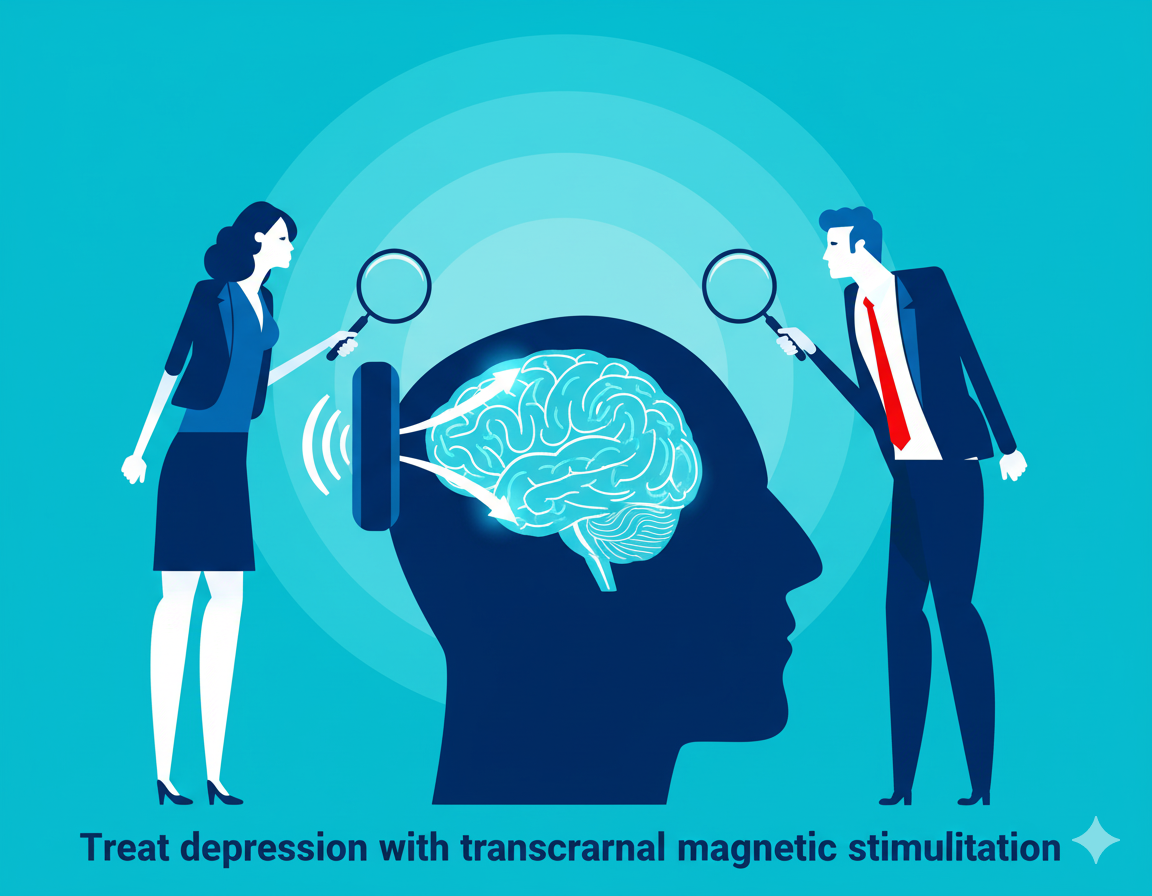
TMS uses focused magnetic pulses to stimulate specific regions of the brain. These pulses are generated by a coil placed against the scalp. They pass painlessly through the skull and briefly excite nerve cells in targeted brain areas.
The most common target is the left dorsolateral prefrontal cortex — a brain region involved in mood regulation that tends to show reduced activity during depressive episodes. Repeated stimulation can increase activity in this area and help rebalance neural circuits.
⚙️ Non-invasive and pain-free
Unlike electroconvulsive therapy (ECT), TMS does not require anesthesia and does not induce seizures. Most patients describe mild tapping or clicking sensations on the scalp during treatment. Discomfort is generally temporary and well tolerated.
Who is a good candidate for TMS?
TMS is most commonly offered to adults with major depression who have not achieved adequate response from one or more antidepressant trials. Clinicians evaluate each patient’s history, symptom profile, and medical background before recommending TMS.
Typical candidates include people who:
- Have persistent depressive symptoms despite trials of medication and/or psychotherapy.
- Cannot tolerate medication side effects.
- Prefer a non-drug approach or want to augment current treatment.
- Do not have medical contraindications such as certain implanted metal devices or a history of seizure disorder (your clinician will screen for this).
What to expect during TMS treatment
TMS is an outpatient procedure performed in a clinic or hospital setting. Sessions are brief, typically lasting 10 to 40 minutes depending on the protocol used.
A standard course often involves daily sessions (five days per week) for four to six weeks, totaling around 20–30 sessions. Some accelerated programs offer multiple sessions per day under close supervision.
Each session begins with the clinician positioning the magnetic coil against your scalp. The device is calibrated to your individual motor threshold. Once set, repeated magnetic pulses are delivered while you remain awake. You can resume daily activities immediately after treatment.
⏱️ Treatment timeline and response
Many patients start noticing mood improvements after several weeks, but response varies. Studies report that a meaningful percentage of people with treatment-resistant depression respond positively to TMS, and a smaller percentage achieve full remission.
Effectiveness: what the research shows
Clinical trials and meta-analyses indicate that TMS can significantly reduce depressive symptoms in patients who have not benefited from medications. Response and remission rates depend on factors such as treatment protocol, the number of prior medication failures, and individual biology.
While outcomes vary, real-world studies suggest that a substantial portion of treatment-resistant patients experience clinically meaningful improvement, and a meaningful minority reach full remission.
Safety and side effects
TMS is generally well tolerated. The most common side effects are mild and short-lived:
- Scalp discomfort or mild pain at the stimulation site.
- Mild headache after sessions.
- Lightheadedness in some people.
Serious side effects are rare. Seizures are an uncommon risk, primarily in individuals with a known seizure disorder or those taking medications that lower seizure threshold. Clinics screen patients carefully to minimize this risk.
🔍 No systemic drug-related side effects
Because TMS does not rely on systemic medication, it avoids common drug side effects such as weight gain, sexual dysfunction, or widespread fatigue. For many patients, this is a major advantage.
Advanced uses and evolving indications
Beyond major depression, researchers and clinicians are exploring TMS for several other conditions. These include:
- Obsessive-compulsive disorder (OCD)
- Post-traumatic stress disorder (PTSD)
- Certain forms of chronic pain
- Smoking cessation and addiction treatment (investigational)
Clinical protocols, coil types, and stimulation patterns vary depending on the condition and the evidence base.
What clinicians consider before recommending TMS
Before starting TMS, providers take a careful medical and psychiatric history. Key considerations include:
- Past responses to medications and therapy.
- History of seizures or epilepsy.
- Presence of metal implants near the head (some devices are contraindicated).
- Current medications that may interact with seizure threshold.
Shared decision making is essential. A clinician will weigh likely benefits, potential risks, logistics of daily sessions, and patient preference.
Cost and accessibility
Coverage for TMS varies by insurance plan and country. Some insurers cover TMS for treatment-resistant depression after certain criteria are met. Availability is expanding, but access may be limited in some regions.
If cost or travel is a concern, discuss options with clinics and insurers. Many centers offer financing plans or can help navigate insurance pre-authorization.
Combining TMS with other treatments
TMS is often used as part of a comprehensive treatment plan. Patients may continue psychotherapy or medication during the TMS course when clinically appropriate. Combining approaches can maximize benefits and support longer-term stability.
📌 Aftercare and maintenance
Some patients benefit from maintenance TMS sessions after the initial course, especially if symptoms reappear. Others maintain gains through ongoing therapy, lifestyle changes, and medication adjustments as needed.
Realistic expectations and hope
TMS is not an instant cure, and results differ among individuals. However, for people who have struggled with persistent depression despite multiple treatments, TMS can be life-changing.
If you or someone you know has not found relief from medications and talk therapy, TMS is worth discussing with a specialist. It is a scientifically validated, non-invasive, and generally well-tolerated option that has brought meaningful improvement to many lives.
Take the next step
If you are considering TMS, speak with a mental health professional who provides a thorough evaluation. Ask about clinic credentials, treatment protocols, success rates, side effects, and insurance coverage. A careful assessment will clarify whether TMS fits your needs and goals.
Mental health care is rapidly evolving. TMS stands out as a modern tool that complements existing treatments and offers real hope — especially for people who have felt stuck for years. With the right guidance and realistic expectations, TMS can be an important step toward recovery and a brighter future.